

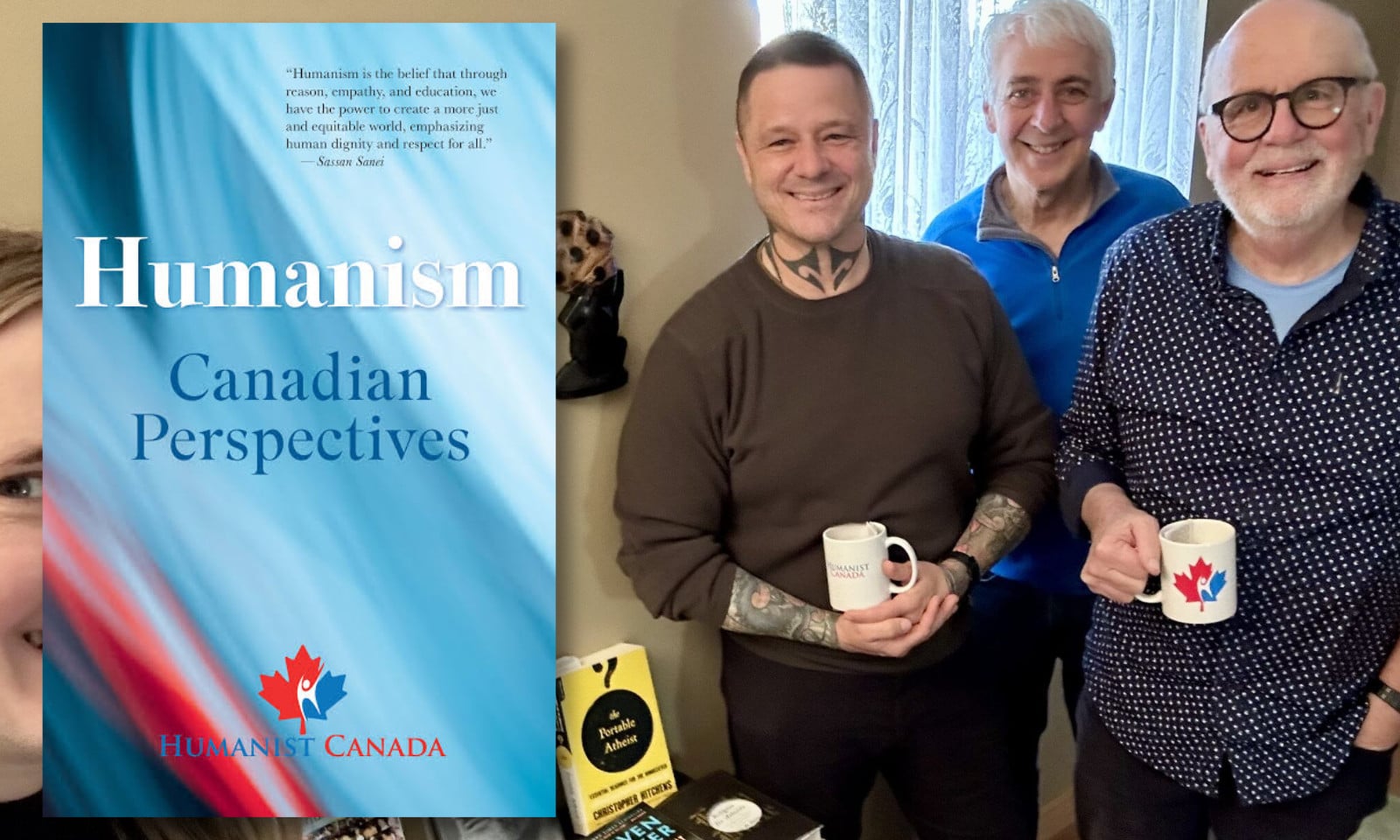
Some books are best judged not only by the answers they provide but by the conversations they invite. Humanism: Canadian Perspectives is one of those books


Humanism: Canadian Perspectives |
Some books are best judged not only by the answers they provide but by the conversations they invite. Humanism: Canadian Perspectives is one of those books. Rather than presenting Canadian humanism as a settled philosophy or finished project, this thoughtful collection portrays it as an ongoing process of learning, shaped by reflection, dialogue, and a willingness to respond creatively to changing realities.
The contributors offer a rich exploration of humanism’s historical roots, philosophical commitments, and contemporary expressions in Canada. Writing from diverse backgrounds and experiences, they share a commitment to reason, compassion, democracy, and human dignity. Together, the essays present a movement that is intellectually vibrant without becoming dogmatic and principled without demanding uniformity.
Reading the collection, I found myself returning to a question that has guided much of my own work: How do ideas become lived experience?
My research on leadership has led me to see leadership not as the achievement of exceptional individuals but as a collective learning process. Communities learn. Organizations learn. Societies learn. Humanism, too, must continue learning if it is to remain relevant in a world facing profound social, technological, and environmental challenges.
From that perspective, I was interested not only in what Canadian humanists believe but also in how those beliefs are expressed in everyday life. Where do people experience belonging? How do they learn to care for one another across differences? How are democratic values practised rather than merely proclaimed?
These questions resonated with my own experience in helping establish the Newfoundland and Labrador Chapter of Humanist Canada, the Killick Coast North Seniors Co-operative, and the Sunrise Funeral Co-operative on the Avalon Peninsula of Ktaqmkuk (Newfoundland). Although only one of these initiatives is explicitly humanist, all reflect values that recur throughout this volume: mutual responsibility, democratic participation, shared ownership, respect for diversity, and the conviction that people flourish when they intentionally create communities of care. They have reinforced my belief that community is seldom discovered; it is patiently and deliberately co-created.
The collection traces Canadian humanism through its roots in Greco-Roman thought, the Renaissance, the Enlightenment, and modern secular philosophy. These traditions remain essential, but they represent only part of humanity’s long conversation about dignity, ethical responsibility, compassion, and living well together.
My principal reservation is that the volume could have opened a broader dialogue with Indigenous, African, Asian, and other philosophical traditions whose human-centred perspectives predate or developed independently of European intellectual history. Indigenous understandings of relationality and reciprocity, African philosophies such as Ubuntu, and Asian traditions emphasizing harmony, compassion, and interdependence offer insights that can enrich rather than diminish the humanist project.
If Canadian humanism hopes to contribute meaningfully to reconciliation, pluralism, and decolonization, it must remain open to learning from the full diversity of humanity’s wisdom traditions. Such openness would not weaken humanism’s foundations; it would strengthen them.
Like leadership itself, humanism is never finished. It is a shared practice of learning how to become more fully human—in relationship with one another, across cultures, and within the communities we choose to build together.
Reviewer’s disclosure: Thomas Mengel is a Humanist Chaplain and a member of Humanist Canada, who establish the Newfoundland and Labrador Chapter of Humanist Canada. His perspectives are informed by his scholarship in leadership and community development as well as his ongoing involvement in humanist and cooperative initiatives. More details can be found at http://www.thomasmengel.com and he can be reached at .