

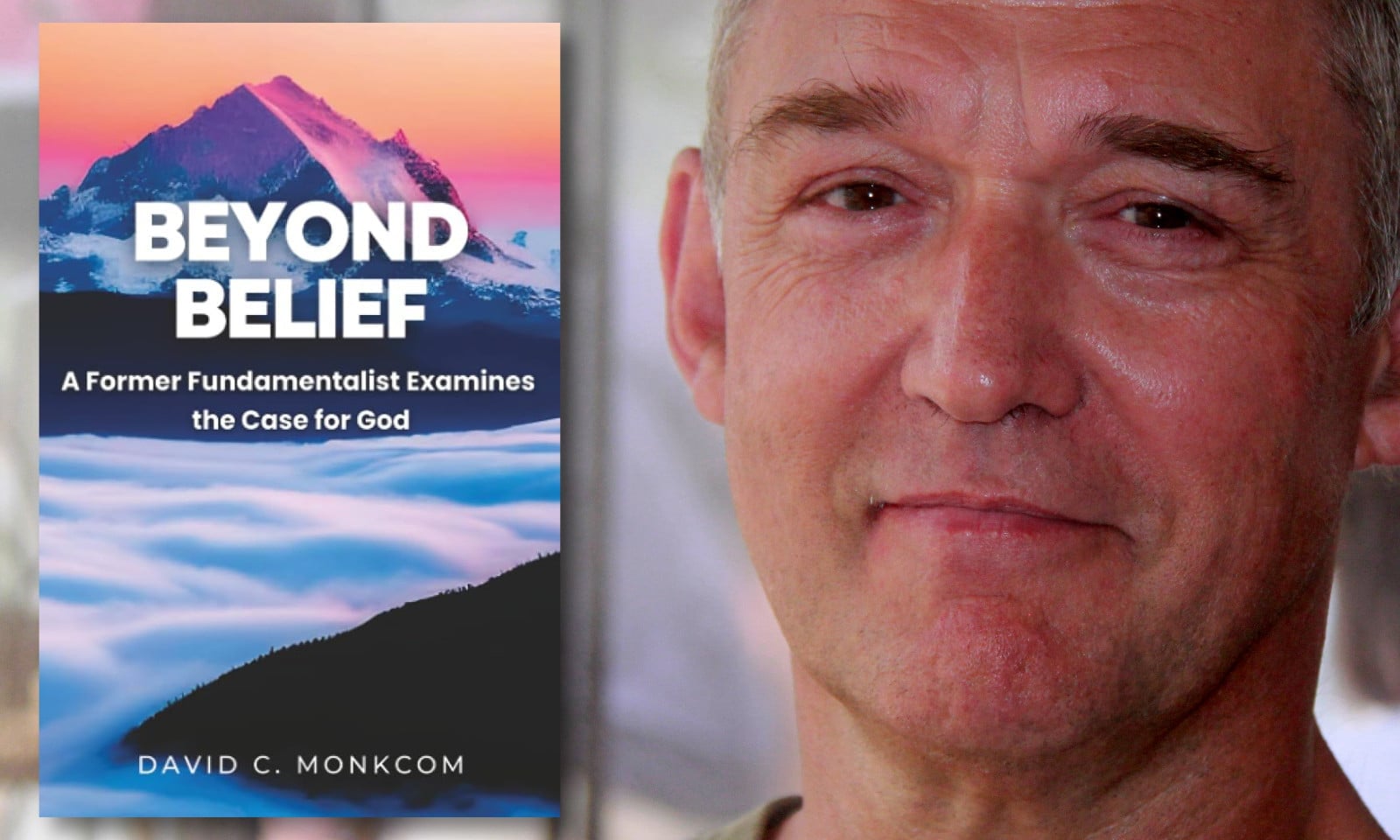
Secular critiques of religion often adopt a confrontational tone, treating faith as something to be dismantled rather than understood. David Monckom's Beyond Belief: A Former Fundamentalist Examines the Case for God offers a markedly different approach.


Beyond Belief: A Former Fundamentalist Examines the Case for God |
Secular critiques of religion often adopt a confrontational tone, treating faith as something to be dismantled rather than understood. David Monckom’s Beyond Belief: A Former Fundamentalist Examines the Case for God offers a markedly different approach. Writing as someone who once embraced fundamentalist Christianity, Monkcom replaces hostility with empathy, demonstrating that it is possible to examine deeply held beliefs critically while maintaining respect for those who hold them.
The book divides naturally into two parts. The first recounts Monkcom’s experience growing up in a strict, high-control Christian community where questioning doctrine carried significant personal consequences. His account illustrates the emotional and social costs of leaving an all-encompassing belief system while also showing that morality, purpose, and meaningful relationships do not disappear when religious certainty is abandoned. Instead, they can be rediscovered on a more human-centred foundation. His story is less about rejecting faith than about developing the courage to rethink inherited convictions and construct an authentic identity.
The second half shifts from memoir to critical examination. Monkcom addresses familiar apologetic claims concerning miracles, religious experience, and the existence of God. Rather than relying on ridicule or rhetorical attacks, he carefully explores why these beliefs remain persuasive to many people before evaluating whether they withstand rational scrutiny. This method gives the discussion an inviting, conversational quality. Readers are encouraged to reflect on their own assumptions instead of feeling compelled to defend them, making the book as much an exercise in intellectual curiosity as in philosophical critique.
One of the book’s strongest contributions is its emphasis on dialogue. Monkcom argues that modern dogmatism—religious or otherwise—thrives when people retreat into isolated ideological communities. His proposed alternative is both simple and challenging: “Let’s engage in a genuine conversation, seeking to understand, not demonize, one another.” That appeal is especially relevant in today’s increasingly polarized public discourse, where opportunities for respectful disagreement often seem in short supply.
For readers interested in secular humanism, Monkcom’s perspective is particularly valuable because it comes from someone who understands religious commitment from the inside. His experience complements the work of those who approach these questions from outside religious traditions, reinforcing the idea that lasting change rarely results from confrontation alone. Instead, meaningful progress is more likely to emerge through patience, careful listening, and a willingness to seek common ground.
Beyond Belief is more than a personal deconversion memoir or a critique of religious belief. It offers a thoughtful model for engaging difficult questions with intellectual honesty and compassion. In doing so, Monkcom reminds us that moving beyond dogmatism does not require abandoning dialogue. Rather, it begins by inviting people with different convictions into genuine conversation.