

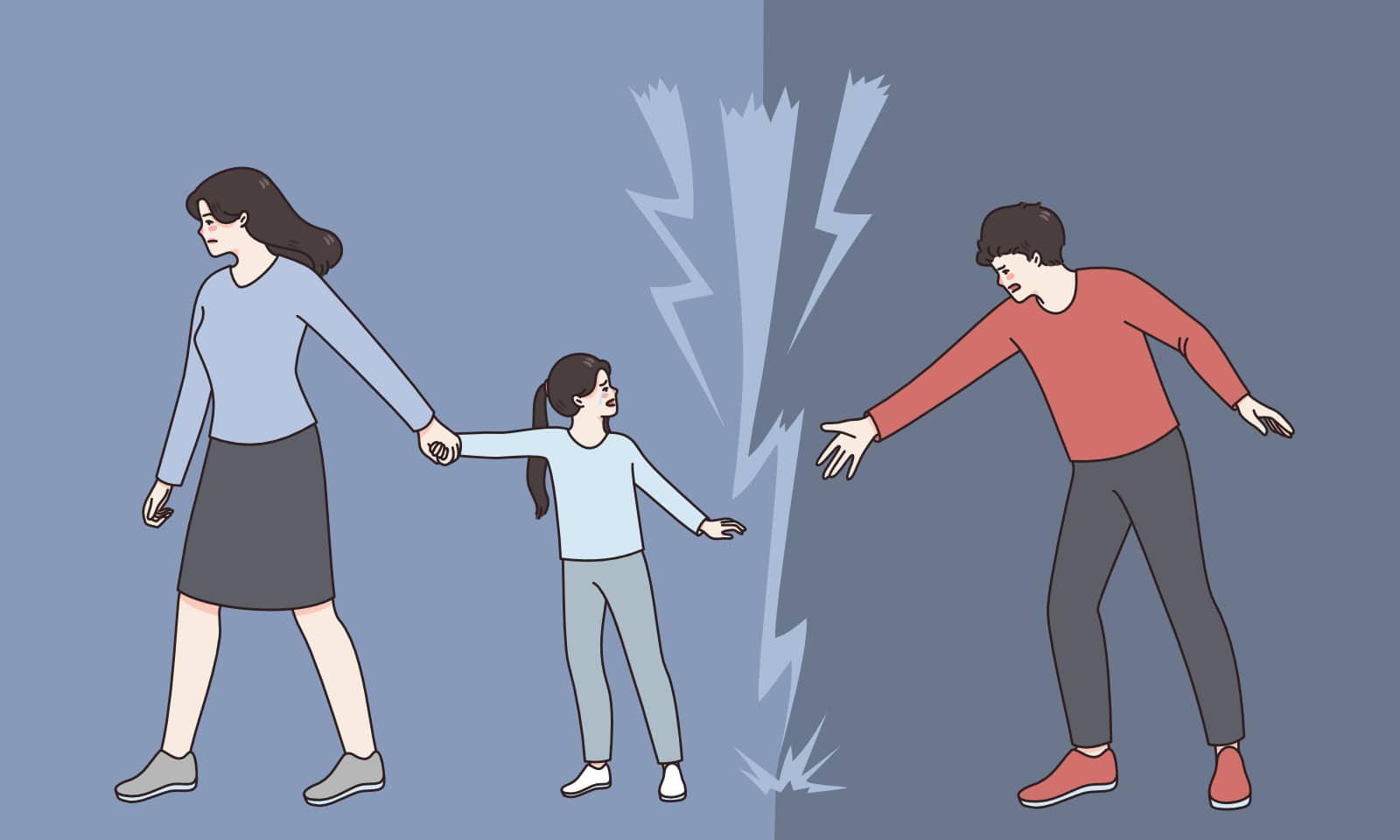
The degree of malevolence and indifference in those who engage in parental alienation cannot be overstated. It is the destruction of something so fragile and precious, the sacred bond between a loving parent and child.


Parents skilled in adversarial combat who “win” care and control of children in a court battle then abuse that power to remove the other parent from the hearts and minds of their children, have complete license to do so in the current framework of “winner-take-all” divorce. The degree of malevolence and indifference in those who engage in parental alienation cannot be overstated. It is the destruction of something so fragile and precious; the sacred bond between a loving parent and child.
Parental alienation occurs when two parents are at odds with each other in the context of a legal battle over their children after separation. It is a hostile environment where one parent is given the power to weaponize the child against the other parent. What is unique about parental alienation is that the child has a positive, healthy relationship with both parents but this changes when one parent begins to use manipulative tactics to pit the child against the other parent. Children’s identities become fused with the alienating parent as they start to see everything that parent does as good and everything the targeted parent does as evil. The child hyper-aligns with the alienating parent and rejects the other outright. This is a form of induced psychological splitting, showing contempt and lack of empathy for the parent who is being rejected.
Parental alienation is a complex form of family violence that targets a parent and hurts the child by damaging the parent’s relationship with their child. The two main features of parental alienation are the child’s unjustified rejection of, and refusal of, contact with the targeted parent, and the alienating parent’s poisonous and abusive strategies to denigrate the targeted parent.
Parental alienation is a relational problem that must satisfy five criteria: the child refuses or opposes contact with the parent; the child has previously had a good relationship with the parent; the parent has not subjected the child to violence, abuse or gross neglect; the favoured parent uses several alienating strategies and methods that are tantamount to both partner abuse and child maltreatment; and the child shows signs of psychological and behavioural disturbances that indicate that they are prone to alienation.
The negative effects of parental alienation on the child and the targeted parent are profound and the incidence of parental alienation is much higher than is commonly assumed. It is estimated that nine percent of parents in the U.S. are alienated from their children and three million children are likely experiencing parental alienation. Canadian data indicate a similar pattern. Jennifer Harman’s research reported that 36% of U.S. and 32% of Canadian parents report being victims of parental alienating behaviours. With parental alienation we are witnessing a form of violence with profound short- and long-term consequences to children, families, and society at large. The damage which is done to a child who is induced into this state of mind is long lasting and deeply harmful as it removes the child’s capacity to feel their own feelings and have healthy relationships with important adults. It also prevents the development of the capacity to hold ambivalent feelings, which is an important part of being able to manage conflict in life.
The scientific status of parental alienation has been confirmed through a large body of research. The Diagnostic and Statistical Manual (DSM-5-TR) of the American Psychiatric Association has identified the core elements of parental alienation under the condition of “parent–child relational problem” (including “negative attributions of the other’s intentions, hostility toward the other, and unwarranted feelings of estrangement”). Yet misleading statements, misinformation, errors, use of science denial techniques, and misrepresentations of the current state of peer-reviewed published research and case law support in regard to intimate partner violence and parental alienation have been made by vocal critics of parental alienation. In particular, the claim that abusive men bring forward allegations of parental alienation victimization to deflect attention away from their own perpetration of intimate partner violence is used to discredit the concept and to induce a moral panic seized upon by popular media accounts based on misunderstandings about the concept.
The attempted delegitimization of parental alienation by groups such as the National Association of Women and the Law are based on flawed research about family violence, a fundamental misunderstanding of parental alienation theory, a failure to recognize that parental alienation affects women as well as men, and outright denial of the fact that parents who are found to have alienated their children have a much greater probability of having a substantiated claim of abuse against them than parents alienated from their children. Alienated parents also have a much greater chance of having a false or unsubstantiated claim of abuse against them than alienating parents, another fact that is excluded in arguments to delegitimize the concept..
Parental alienation is most often paternal alienation. Parental alienation as a hate crime disproportionately affects fathers and the father-child relationship, as alienation festers in situations in which separating parents cannot agree on child living arrangements. They find themselves in the midst of a court battle in which judges, with no training in the delicate matters of child development and family dynamics, rule that the “best interest of the child” is served by removing one parent, usually the father, from the life of a child via a “primary residence” order to the other parent, usually the mother. Parental alienation, as a form of collective abuse of children as much as it is individual abuse, starts here. The conflict continues as displaced fathers desperately attempt to increase the little time they are allowed to visit their children while mothers may seek an uncomplicated living situation by excluding the father from the life of the child. In many such cases, a more severe form of parental alienation takes hold. The forced separation of young children from their fathers is a form of collective father and child abuse for which we all bear responsibility, as it results from current laws and government policies.
The phenomena of parental alienation and the absence of fathers in children’s lives in general are global social problems which have profoundly negative effects on children’s well-being. The severe effects of parental alienation on children are now well-documented; low self-esteem and self-hatred, depression, social isolation, poor academic performance and substance abuse and other forms of addiction and self-harm are widespread. First, self-hatred is particularly disturbing among affected children and is one of the more serious effects of parental alienation or any form of child abuse. It is fairly common in situations of parental alienation. Teaching hatred of the other parent is tantamount to instilling self-hatred in the child. Children internalize the hatred targeted toward the alienated parent and are led to believe that the alienated parent did not love or want them. They experience severe guilt related to betraying the alienated parent. Their self-hatred and depression are rooted in feelings of being unloved by one of their parents and from separation from that parent while being denied the opportunity to mourn the loss of the parent, or to even talk about the parent. Second, alienated children exhibit severe psychosocial disturbances due to exposure to parental alienation. These include disrupted social-emotional development, lack of trust in relationships, social anxiety, and social isolation. They have difficulties forming and maintaining relationships, and tend to discard people whenever they experience a negative reaction to them. They have a lack of tolerance for others. They have poor relationships with both of their parents. As adults, they tend to enter partnerships earlier, are more likely to divorce or dissolve their cohabiting unions, and are more likely to have children outside any partnership, and are more likely to become alienated from their own children. Third, low self-sufficiency, lack of autonomy, and a lingering dependence on the alienating parent are characteristic of alienated children. They have a risk of becoming psychologically vulnerable or dependent on others. They are more likely to play truant from school and leave school at an early age. They are less likely to attain academic and professional qualifications in adulthood. They are more likely to experience unemployment, have low incomes, and remain on social assistance. They seem to aimlessly drift through life. Finally, alienated children experience problems controlling their impulses, and struggle with addiction and self-harm. They are more likely to smoke, drink alcohol, and abuse drugs, as well as succumb to behavioural addictions, and are more likely to be promiscuous, foregoing contraception and becoming teenage parents.
There is also a large body of research on the causal effects of father absence in particular. Father absence is associated with diminished self-concepts in children, youth crime (85% of youth in prison have an absent father), poor academic performance (71% of high school dropouts have an absent father), and homelessness (90% of runaway children have an absent father). Fatherless children are more likely to be victims of abuse, and have significantly higher levels of depression and suicide, delinquency and promiscuity, behavior problems, substance abuse, and teen pregnancy. And following parental separation, children consistently report that they wish they had more contact with their fathers and feel abandoned when fathers are not involved in their lives.
Of the four main types of child abuse, physical, sexual and emotional abuse and neglect, parental alienation is usually considered to be a form of severe emotional or psychological abuse. However, it often co-occurs with the three other types of child abuse: neglect, because alienating parents’ hatred of the targeted parent is stronger than their love from their child. They are less attuned to and thus neglect the needs of the child; in regard to physical and sexual abuse, children in situations where one parent is absent from their lives are at significantly greater risk than children who have meaningful relationships with both parents. In particular, children from father-absent homes are five times more likely to have experienced physical abuse and emotional maltreatment, and are exposed to a one hundred times higher risk of fatal abuse; have a higher risk of physical health problems, psychosomatic health symptoms, and illness such as acute and chronic pain, diabetes, asthma, headaches, stomach aches, and feeling sick; run greater mortality and morbidity risks, and are more likely to die as children; live an average of four years less over their life span; are more likely to experience problems with sexual health and contracting sexually transmitted infections. Preschoolers who are alienated from one of their parents are forty times more likely to be sexually abused.
Paternal alienation is also a form of intimate partner violence. It is associated with legal and administrative aggression tactics used by alienating parents to gain and maintain power over their children and the other parent; mothers, when granted primary responsibility of children as resident parents, are more likely to abuse their power as gatekeepers of the father-child relationship. Child absence results in a pronounced reaction of grief and loss on the part of the targeted parent, often leading to a situation of acute post-traumatic stress.
In my first research study of alienated fathers in the late 1980’s, I found that fathers who lost contact with their children suffered a grief reaction containing all the elements of a bereavement, the result of child absence, loss of the father role, and the constraints and restrictions of becoming mere visitors in their children’s lives. My more recent research has found that the situation has actually gotten worse for alienated fathers; they are now manifesting a more pronounced reaction of post-traumatic stress, as they are more acutely aware of the harm their absence is causing their children. At the same time, apart from a few self-help groups, effective support services for fathers are virtually non- existent. Fathers mainly suffer in silence; in quiet desperation. Those who have the courage to speak about their woundedness and the woundedness of their children are subjected to a mean-spirited cultural response, where their talk of woundedness is mocked. Professional service providers often fail to recognize fathers’ grief as a reflection of their lost attachment with their children on the one hand and, in focusing on fathers’ deficits, their untapped strengths as parents on the other. The experience of being removed as a loving parent from the life of one’s child via a sole custody order strikes at the heart of a father’s being. Suicide rates are reported to be of “epidemic” proportions among alienated fathers struggling to maintain a parenting relationship with their children.
Addressing parental alienation requires a multifaceted approach, with several levels of intervention. First are needed reforms in socio-legal policy to maintain and enhance paternal involvement in children’s lives post- separation, including establishment of a legal presumption of shared parenting in contested cases, rebuttable in cases of family violence, as the foundation of family law. Second, parental alienation must be recognized as a serious form of emotional child abuse, associated with other forms of children maltreatment, warranting a child protection response. Child protection authorities must recognize that children witnessing family violence, including parental alienation, is a child protection matter. Third, as a form of intimate partner violence, parental alienation must also be regarded as a criminal law matter, and barriers to making perpetrators accountable and to the protection of victims need to be acknowledged, recognized and removed. Victims of severe alienation require the full protection of the criminal justice system. Finally, treatment of parental alienation, including specialized intervention with children and targeted parents, and parent-child reunification programs, are vital. We need professional practice guidelines to engage this at-risk and underserved population in a constructive clinical process. The key to engaging alienated fathers and their children is to validate fathers’ parental identity and to ensure their active and uninterrupted involvement in their children’s lives.
In conclusion, as a hate crime largely targeting fathers and their children, parental alienation is far more widespread and harmful that most of us assume. A large number of non-residential separated fathers and their children find themselves at risk of parental alienation and father and child absence, despite increasing levels of paternal involvement in child rearing in two-parent families. Immediate and decisive action to restore ruptured father-child relationships following an alienation campaign is urgently needed. This includes holding perpetrators accountable, including parents who have violated their children’s core need for the love of both parents in their lives, and the myriad professionals, including judges and those who work in the shadow of the law, who have violated their responsibility to support both parents in the fulfillment of their responsibilities to their children. Fathers who are alienated from their children’s lives are looking for constructive alternatives to adversarial methods of reconnecting with their children; an active program of outreach is essential for the survival and well-being of these fathers and their children. We can no longer be bystanders in this growing form of hate crime. 