An extraordinary and momentous evening—I fell in love with the man and the poet all at once.


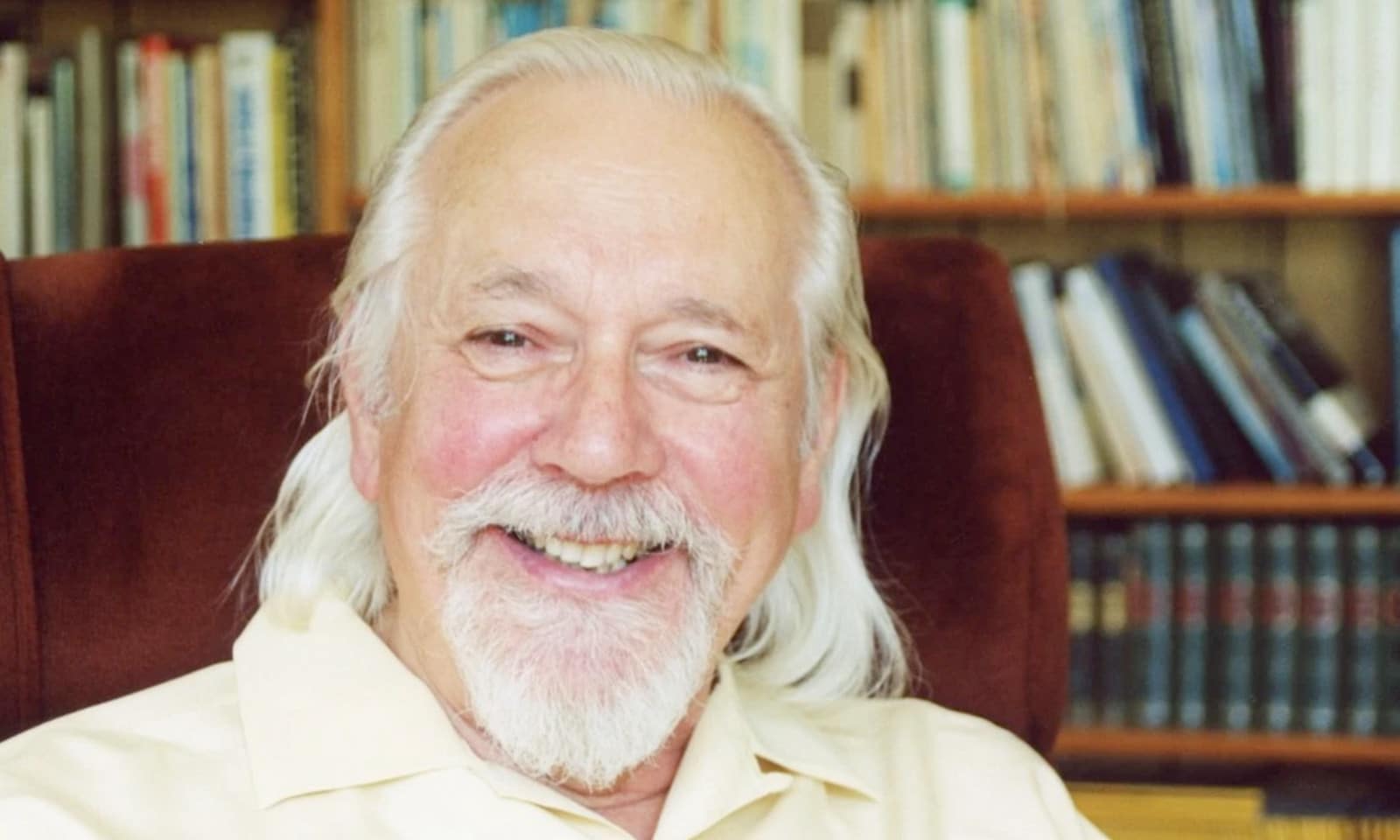
Photo courtesy of the Beissel family.
In Memory of Henry Beissel
Henry Beissel passed away on January 9, 2005, at the age of 95. His wife Arlette wrote this heartfelt eulogy for him and included his own favorite poem, “Night Reflections”. But first, here are a few words to remind us of the person he was.
Henry Beissel was a distinguished Canadian Humanist, acclaimed poet, author, playwright, and university professor whose career has spanned decades and crossed continents. Born in Germany in 1929, Beissel immigrated to Canada in 1951, embracing his new homeland with a passion that would inform much of his literary and academic work. He became a central figure in Canadian literature, recognized for his deep explorations of human experience and his commitment to social justice and intellectual freedom.
As a poet, Beissel has published numerous collections, earning accolades for his evocative language and philosophical depth. His plays, most notably “Inuk and the Sun,” have been performed internationally and are celebrated for their innovative use of myth and narrative. Beissel’s writing often reflects his humanist values, urging readers and audiences to confront ethical and existential questions.
In addition to his creative work, Henry Beissel served as a professor at Concordia University in Montreal, influencing generations of students with his rigorous scholarship and encouragement of critical thought. His contributions to Canadian culture have been recognized with several awards, cementing his legacy as a major voice in contemporary literature and theatre.
Welcome to all of you who loved Henry and wish to reflect on his passing. In your company, I am glad to celebrate his élan vital, his charisma and joie de vivre, his all-encompassing curiosity and childlike sense of marvel, and his deep humanity.
Norman Yates painted Henry’s portrait focusing on his multifaceted and complex personality. This intricate artwork with movable pieces would require 27, 000 years to see every possible combination. And guess who loved doing such calculations?
Henry was fully cognizant of his Jungian shadow. He was deeply wounded by the trauma war inflicts on children, and yet it was not readily apparent. After two years of utter despair, he gathered the will and courage to forge a strong and optimistic persona that became his endearing identity.
I spent months sorting out his archives now housed at Concordia. It was a fascinating and emotionally draining labour of love Henry was most grateful for. Having shared 56 of his 95 years, I plan to write a memoir about the rare opportunity I had to retrace the full arc of a remarkable writer’s life.
Since childhood, I’ve had two passions—poetry and art. When I discovered Baudelaire’s Les Fleurs du Mal, I had no inkling I would share my life with a poet and exhibit my paintings.
In my early twenties, I spent two years in London before emigrating to Canada. In 1968, I was studying and teaching in Edmonton where I met Henry through a dinner invitation at the U of A Faculty Club before a Beissel reading. An extraordinary and momentous evening—I fell in love with the man and the poet all at once.
A few months later, Henry heard I was living in Montreal. When I read his postcard, the Edmonton memories flooded my entire being. I couldn’t resist—I had to make the call I knew would change my life. After exciting years when we both taught in Montreal, I joined Henry at “Ayorama” (Fate for the Inuit). His writing retreat quickly became our home. Since Henry had two daughters, I feared he might not want another child. He reassured me he had always wanted eight children! To our great joy, thus Clara was born. Henry cherished those years immersed in nature. He truly loved tending a hundred acres of land and writing to his heart’s content. Those peaceful years attenuated his childhood nightmares. Not much of a pioneer, I thoroughly enjoyed motherhood instead. A Chinese scholar perceptively referred to “Ayorama” as “Henry’s Walden.”
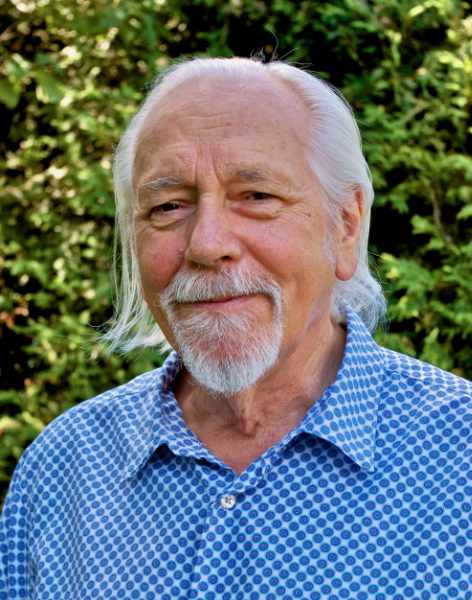
Henry Beissel, photo by Clara Beissel
Marriage was not something I had envisaged, and yet I was ever so keen on being a grandmother. Clara fulfilled that dream of mine and thrilled us both with Bennett’s birth.
Henry’s last project was his autobiography dedicated to his grandson. Sadly, I knew he couldn’t possibly bring it to fruition. Such a rich life whose cornerstone was a fierce dedication to writing will no doubt attract a biographer. Maybe Bennett some day. I heard many of Henry’s exciting lectures and can vouch for his reputation as a great prof and mentor. Quite a few of his students became writers and some are here with us.
I owe Henry a keener interest in science while his appreciation of art blossomed the more we visited museums all over the world on splendid vacations and stimulating professional trips. Henry wrote ekphrastic poetry. He chose paintings of mine that resonated strongly with him. I brought Caribbean Rhythms that vibrates with a zest for life.
No surprise Henry donated his body to science—the ultimate altruistic gesture from a writer who had in him a tad of the scientist manqué. Art and science combine and thrive throughout his versatile opus.
Creativity fostered a strong bond between us. Henry was euphoric when he could share with me a morning’s worth of good work. He was keen on my feedback I cherished giving. For twenty years, I was his literary agent.
I miss our debates on everything under the sun and our lively dialogues exploring, refining and appreciating each other’s work.
Music was at the core of Henry’s life. We heard a multitude of fabulous concerts in Ottawa and abroad. I am touched that Jakob Fichert, a renowned pianist, flew from London to play for his godfather. So gratified I put on music performed by Jakob for what would turn out to be Henry’s last evening and my last hours with him. Oh, the power of music that is quintessential to his poetry!
I was too devastated and exhausted to organize Henry’s Celebration of Life. Despite their own grieving, Clara, Angelica and Myrna generously attended to everything. My friend Dani (Danièle Rae) was there for me during Henry’s declining health and my recovery from surgery. Empathetic neighbours spoiled me with delicious food and offers of help.
Farewell, my love. I will build a life on my own with your strong presence deeply rooted in me. As Hemingway said “No one you love is ever dead.” Delving into my creative side will bring solace. The intense decades we shared were an incredible gift.
An ardent meliorist, you wrote to point the world in a more sagacious and humane direction. The Humanists and scores of people admired your life-long robust political engagement.
The loss of your loving companionship and brilliant mind is daunting. The silver lining is that artists leave behind a legacy that sustains us. And contribute you did and will—to the cultural life of Canada, of your home country thanks to your books in German and Heide Fruth-Sachs’s fine translations and of the world through your poetry and plays translated into many languages.
My deep gratitude goes to your publishers (especially Guernica Editions for your last seven poetry collections), to Paulina Novak whose PhD thesis is now a book and to all the directors and actors who thoroughly enjoyed putting on your plays, among them Inuk, Under Coyote’s Eye and Goya.
To give an overview and the range of Henry’s poetic oeuvre, I’ve linked his poetry titles and present them in his voice.
- DYING I WAS BORN is my Requiem for both our fathers and a few friends, among them Jean Gascon and Dr John Rae.
- I wrote love poetry to WITNESS THE HEART, figuring out A METEOROLOGY OF LOVE and forged NEW WINGS FOR ICARUS.
- For my daughters, I sang THE WORLD IS A RAINBOW and A CHILDREN’S ZOO.
- For Canada and for my sweetheart, I created CANTOS NORTH. Governor General Adrienne Clarkson quoted lines from my epic poem on a trip abroad. Arlette’s poem is CANTOS DU NORD.
- THE SALT I TASTE seeps into SEASONS OF BLOOD, my magnum opus in seven elegies. THE IDES OF MARCH are followed by APRIL’S FOOLS who initiate A MAY SONG AND DANCE.
- WHERE SHALL THE BIRDS FLY?, I asked, and carried on with WHEN AFRICA CALLS UHURU and ACROSS THE SUN’S WARP.
- FACE ON THE DARK launched my poetical journey. I indulged my passion for science and used my wit to pursue FUGITIVE HORIZONS and was emboldened to step into FOOTPRINTS OF DARK ENERGY, winner of the 2020 Ottawa Book Award. Read my seventh elegy in that book.
- No AMMONITE in Glengarry County but countless STONES TO HARVEST, love poems I wrote for Arlette. STONES metamorphosed into her ESCARMOUCHES DE LA CHAIR.
- THE DRAGON AND THE PEARL came all the way from China where I lectured. There was also a POEMS NEW AND SELECTED.
- Born in Cologne where I spent my childhood during Nazi times, I couldn’t escape COMING TO TERMS WITH A CHILD, checking all SIGHTLINES.
- To regain my equanimity, I embraced Zen for WHAT IF ZEN GARDENS …
I was keen to know which shorter poem Henry would like to be remembered by. He chose “Night Reflections.” And so, for me, it was the logical choice.
You can see it in this issue’s Poetry Corner. 