

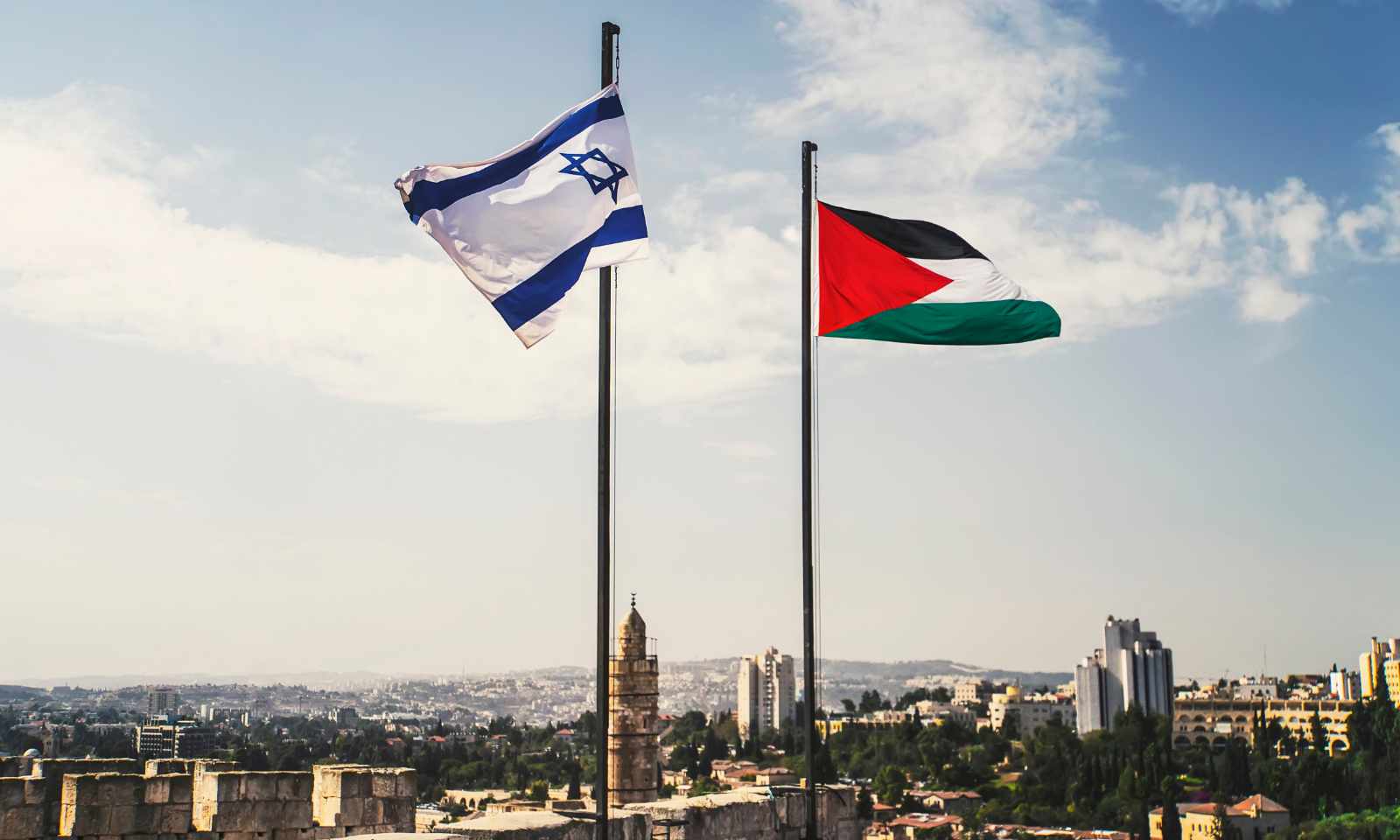
Most humanists will recognize the moral depravity exhibited by those who participated in the October 7 massacre, but some excuse it as the natural or inevitable result of years under occupation.


On October 7, 2023 terrorists led by Hamas invaded Israel. They brutally murdered over 1,200 people and took 250 people hostage with them back to Gaza. In the last issue of Humanist Perspectives (Spring, 2025) we examined the responses from Israel, Iran and its proxies. We also examined the historical context of this conflict including the British Palestinian mandate subsequent to World War I, the region’s history as part of Syria in Ottoman, Egyptian, and Byzantine empires, and earlier kingdoms created subsequent to Jewish settlement in the 12th Century BCE. We noted that while the Roman Empire gave the name “Palestine” to this as one of their provinces, there were no Palestinian people recognized as such until the latter half of the 20th Century. We also examined historic anti-Semitism, the rise of Zionism, and the two-state solution proposed by the United Nations in 1947.
In this issue of Humanist Perspectives, we review the almost continuous conflict subsequent to the U.N. proposed partition of Palestine in 1947. We also examine the role of religion in sustaining this conflict and we suggest a possible humanist way forward. If you would like to contribute directly the NEP discussion on this topic please visit: https://nep-humanism.ca/2025/02/28/discussion-paper-on-palestine/.
Most humanists will recognize the moral depravity exhibited by those who participated in the October 7 massacre, but some excuse it as the natural or inevitable result of years under occupation. But the Hebron massacre of Jews almost 100 years earlier, before the creation of Israel, displayed similar dehumanizing hate:
It was a quiet Shabbat morning in Hebron (August 23, 1929) when a Muslim Arab mob 3,000 strong, armed with clubs and swords and knives, spent two hours going from house to house, massacring, raping and mutilating any Jews they found. They slaughtered 30 Rabbinical students as they rested in their quarters. They tied a baker’s head to a lit stove and cooked it. They cut a Rabbi’s brain out of his skull. They hung a Jewish woman by her feet, and cut breasts, noses and hands off bodies. (Quoted in Danielle Kubes; Hamas’s savagery would exist with or without Israel, Dec. 5, 2023.)
As we have noted, Israel’s War of Independence broke out in 1948. Despite winning that war, peace was marred by continuing conflict on a smaller scale: shootings, car-bombings, knifings, kidnappings and other acts of terror. The Sinai War broke out in 1956 after Egypt closed the Straits of Tiran blockading Israel’s only port on the Red Sea. They also closed the Suez Canal to international shipping. France and Britain joined Israel in a war to reopen the canal. It ended with an agreement to reopen the Straits and place the canal under international control. Egypt kept control of the Sinai Peninsula and Gaza.
The Six-Day War broke out in 1967, after Egypt once again closed the Straits of Tiran to Israeli shipping. Joining the Egyptian invasion of Israel were Jordan and Syria. After this war, Israel took control of the Sinai Peninsula and Gaza. The Arabs in Palestine began to call themselves “Palestinians.”
The Yom Kippur War broke out in 1973 in a surprise attack on the Jewish Day of Atonement. In the peace treaty, not signed until 1979, Egypt recognized Israel as a state and regained the Sinai Peninsula. Egypt did not ask for the return of Gaza.
The new Palestinians have engaged in two “Intifadas.” The first, beginning in 1987, featured rock throwing youth, strikes and civil disobedience. It ended in 1993 with the signing of the Oslo Accords that gave limited self-government to the Palestine Liberation Organization. At the subsequent Camp David Accords of 2000, the PLO was offered a Palestinian state that included 96% of the West Bank, the Gaza Strip and East Jerusalem as its capital. The PLO rejected this offer because it did not include control of Temple Mount in Old Jerusalem and did not grant the Arabs a right of return to Israel proper. As a consequence of the failure to accept this “two state” solution, Israel maintained formal control of approximately 60% of the West Bank. It is within this area new Jewish settlements have been created. A second intifada began in 2000 and included suicide bombings. It ended five years later with a ceasefire agreement to de-escalate hostilities. Israel withdrew from the Gaza Strip in 2005 closing all Jewish settlements in what was termed “trading land for peace.”
Hamas claims that the events of October 7, 2023 were a consequence of Israeli occupation, even though Israel had not occupied Gaza for 18 years. The claim of occupation is often based on Israel’s continued control of its borders with Gaza and its blockade restricting the movement of goods and people. Israel maintains that these measures are a necessary response to terrorist attacks. Hamas was able to convince Israeli officials that they had adopted a more pragmatic non-terrorist approach prior to the 2023 atrocity, which is why the Israelis relaxed their guard even to the point of ignoring the concerns of lower ranking intelligence officers.
A blockade is not an occupation, but we need to consider that the Islamists, represented by Hamas and Islamic Jihad, view the very existence of Israel to be “occupation.” They have insisted on one Palestinian state that stretches “from the [Jordan] river to the [Mediterranean] sea” with the implication that Jews are not Palestinians and have no right to live in this territory. The tenacity with which Palestinians insists on this “solution” in the face of repeated defeats indicates a religious fervor.
What Does Religion have to do with it?
For Hamas, Hezbollah and other jihadist movements, this is not a secular struggle. Its heroes are “martyrs” not “freedom fighters.” We must consider the possibility that the jihadists counted on Israel invading Gaza after the October 7 atrocity, which would create many civilian martyrs for their cause. The original 1988 charter of the Islamic Resistance Movement (Hamas) frames its struggle in the context of jihad stating, “Israel will exist and will continue to exist until Islam will obliterate it, just as it obliterated others before it,” It’s revised 2017 charter still identifies its members as Muslims and promises to obliterate the State of Israel but frames this as “anti-Zionism.”.
Because Zionism originated with the objective of establishing a Jewish state, anti-Zionism is a denial of the Jewish state’s right to exist. Yet Israel has existed for 75 years. Although some humanists might disagree with the nationalism underpinning the creation of modern nation states — that people who identify with a particular language and culture and live in a common territory are a nation with the right to a state on that territory — we would not agree with involuntarily destroying the states so created or killing their citizens. Since the modern state of Israel has adopted many secular and liberal values, we suspect that the problem is not that it is Zionist but that the majority is of Jewish ancestry.
The persistence of the jihadists in attempting to murder Israelis irrespective of danger to themselves with cries of “Allahu Ahkbar” explicitly indicates a religious motivation. The mutilation that often accompanies jihad can be legitimated by Qur’an 8:12: “I will cast terror into the hearts of those who disbelieve. Therefore strike off their heads and strike off every fingertip of them” and Qur’an 9:5 “And when the forbidden months have passed, kill the idolaters wherever you find them and take them prisoners, and beleaguer them, and lie in wait for them at every place of ambush.” According to a hadith attributed to the Prophet Mohammad in both Sahih al-Bukhari and Sahih Muslim, two of the most respected collections of hadith in Islam, the Day of Judgment will not come until the Muslims fight the Jews and the rocks and trees will call out saying, “O Muslim, O servant of Allah, there is a Jew behind me, come and kill him.”
Maybe the modern jihadists are trying to emulate the Prophet Mohammed’s seventh-century conquest of Medina (then known as Yathrib). Thirty to forty percent of its population had consisted of three Jewish tribes. After a series of battles, Mohammad showed mercy allowing two tribes to immigrate to the Daraa region of Syria (which borders what is now the Golan Heights). The third tribe was destroyed with all males who had reached puberty executed and the women and children taken into slavery.
In defending the notion of Islam as a religion of peace, some theologians argue that the passages referenced need to be understood in the context of violent times in which they were written. Another interpretation grounded in medieval Sufism, is that the concept of jihad has two meanings: an outward (military) struggle and an inner (spiritual) one and that the more peaceful interpretation applies to modernity. Although humanists certainly hope that this modern interpretation will prevail, the jihadists of today appear to be externalizing their struggle. Jihad meant conquest of the infidels in the seventh century, and to them it still does. The leaders of Hamas and Islamic Jihad declare dead terrorists to be “martyrs” who will be given a special place in Heaven.
There are also Israelis who hate. On December 18, 2023, Israeli police charged Noam Dayan with incitement to violence. He had written on social media, “Personally, I would relish blowing up Arab babies’ skulls,” “Palestinian girls should be raped,” and “Death camps should be made for Palestinians.” Since October 7, 2023 Israeli police have charged 34 people with this crime. A web search using ChatGPT did not uncover any data on similar charges against Arabs in Palestinian courts.
A Humanist Way Forward
It is possible to develop a humanist dialectical theory of history. We are both individual and social beings. The Enlightenment increased the freedom of the individual to ascertain what is true through rational and scientific means, thereby displacing previous mechanisms, such as organized religion, that enforced a form of collectivism. The resultant increased emphasis on individualism led to the rise of capitalism and the Industrial Revolution. Humanist compassion, supported by Western religious traditions, placed limits on unfettered capitalism, and this led to universal education, medicare and the welfare state. This has not happened in many parts of the world.
Karl Marx proposed a post-capitalist socialist collectivism wherein the Enlightenment individual would meld into a cooperative commonwealth while retaining personal rights and freedoms. That, of course, did not happen. The Soviet Union was built on a pre-capitalist feudal society that inherited its view of humanity from the Mongols, and this eventually resulted in Stalin. Similarly, the early leaders of the Palestine Liberation Organization along with other Arab liberation movements, such as the Baath parties of Syria and Iran, were educated in Western socialism, but their movements emerged in societies that had experienced neither the Enlightenment nor industrial capitalism. Individual life was of value only insofar as it serves the collectivity. For example, Hamas built hundreds of miles of tunnels for terrorists and their armaments but forced civilians to remain above ground. Similarly, Hamas stores weapons in, under or near schools, mosques and hospitals, thus placing civilians in direct danger during enemy attacks.
In an ideal world, humanists would favor a single state that includes both Jews and Palestinians with a secular government that promotes rational discourse, freedom of thought and speech, scientific discovery and universal compassion. But that kind of state is not possible apart from a society that actually values those principles. Israel is the only functioning democracy with (somewhat) liberal values in the Middle East today. Given that fact, we would recommend an intermediate stage of development that includes:
- Recognition of Israel’s right to exist and to defend itself;
- Interim self-government for Palestinians in Gaza and the West Bank with the understanding that they must not harbor terrorists or their supporters;
- A universal education system which teaches the values of equality, human rights and peace along with basic literacy, and the replacement of textbooks that demonize Jews or Arabs;
- Mixed classrooms of Arabs, Jews and other ethnic and religious groups where possible;
- The development of cross-cultural exchanges for all students;
- Universal hate speech laws that criminalize incitement to murder while promoting freedom of speech.
- The return of West Bank settlements deemed illegal by the United Nations to the new secular government in the West Bank
Humanists would view any “two-state” solution with respect to Palestine as interim. We hold that Jews and Arabs should ultimately live cooperatively in a secular state as equals. The problems in reaching that ideal were illustrated by the suspension given an Israeli teacher shortly before the October 7 massacre. Sabrine Masarwa’s participation in a Nakba Day march was noted by some parents and students in her community, who demanded her dismissal. Her community of Tayibe is predominately descended from those Arabs who never left Israel and were granted Israeli citizenship. The Israeli Ministry of Education maintained that her conduct violated professional ethics. Masarwa said that her identity as a Palestinian and her participation in the march were important to her. The ministry admitted that there was no evidence that she had incited violence or used her position to indoctrinate her students.
In an ideal society, teachers and other citizens are allowed, in fact are encouraged, to give expression to unpopular ideas without undue censorship. Perhaps Masarwa would have been allowed to express her viewpoint on her own time, had her school used an approach based on ethical guidelines for teaching controversial issues.
Teaching about the Nakba and the parallel ethnic cleansing of Jews from Arab territories involves navigating a complex and sensitive historical narrative beginning with historical accuracy and balance. Such an approach might begin with a historical timeline that includes the Zionist movement’s aspirations, Jewish anti-Zionist perspectives, and various, sometimes competing, Arab-Palestinian narratives. Events can be understood from various perspectives without the suggestion that a perspective is necessarily tied to an ethnicity. An ethical approach to controversial topics avoids simplification while drawing liberally on primary sources. The teacher acts as a facilitator of discussion rather than an advocate for one side. Students are encouraged to analyze sources for bias, understand propaganda from the period, and evaluate the reliability of information. Teachers foster an environment where students can express their views while being respectful of others. The curriculum would include comparative history, legal and humanitarian aspects. Educators using this method should be transparent about their own biases or cultural background, encouraging students to recognize and critique bias in themselves and others. By using this multi-faceted approach, educators can ethically teach these complex historical events, helping students to understand the multifaceted nature of history, the impact of collective memory, and the importance of empathy and critical inquiry. In the process, students would be learning the skills they need to live side by side with “the other.” This dream may only be possible in a remote future, but it begins with education. First, terrorism must be eliminated. 