Humanist Perspectives: issue 193: I Married a Humanist
An interview with former CBC personality Ralph Benmurgui
I Married a Humanist
An interview with former CBC personality Ralph Benmurgui
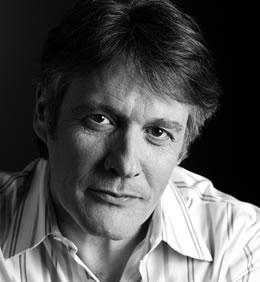
Tell me a bit about your personal history. Where were you born? Where were you educated? What was involved in your career development?
I was born in Tangiers, Morocco, in 1955. We came to Canada when I was just under two, the youngest in my family. We are Spanish-Moroccan Jews with hundreds of years of history in Morocco and before that derived mostly from the Iberian peninsula/Spain. There’s some Italy in there and some Persian as well.
I grew up in Toronto, first in the Kensington Market/Regent Park areas. We moved about seven times in eight years. There are four siblings. We went through a lot of stuff making our way through the minefield of being an immigrant.
My mother and father met at the Jewish Hospital in Tangier and he sort of managed the place and she was a nurse there. When we came to Toronto, she had credentials as a nurse and worked at Mount Sinai. He had no credentials and so ended up as a Nursing Assistant and did that for most of his life. My mother eventually ended up at OHIP as a manager for Hospital claims. Both had good Union jobs – thank God. So we weren’t poor.
We eventually moved to the last street on the West side of Forest Hill which was an interesting cultural clash because we were working class in an upper-middle and upper class neighbourhood and we were Sephardic Jews while most everyone around us were Ashkenazi Jews; so we were Jewish but not their Jewish, and we were Forest Hill but not of Forest Hill.
I started off in show business playing in rock bands, stand up comedy, acting, directing, etc., and whatever else I had to do to make a living. In my late twenties I realized I didn’t really like this life; it was too precarious for me. My sister was in journalism school at Ryerson so I audited some courses and I realized I quite liked journalism. And then a friend of mine from my stand up days was managing CKLA Radio at Ryerson so I convinced him to make me the news director because my sister advised me that if I wanted to get into Ryerson, I needed to demonstrate that I had some practical experience. So I worked at the Ryersonian writing articles and not knowing what I was doing. I eventually got into Ryerson’s journalism program and before I even finished, my broadcast teacher, Stuart Maclean, who was producing Sunday Morning on CBC, asked me to co-produce a Christmas TV special with him. So I was a year short of finishing my degree at Ryerson when I was offered media broadcast opportunities. So Stuart deprived me of my degree.
Nonetheless, I went to Winnipeg to work at CBC radio. Stuart told me there was an opening for a researcher. And I had never been to Winnipeg and there was no Internet at the time. So I went to the CBC archive library and I asked somebody how to prepare a host for an interview and they gave me the format. I came into the interview for the position prepared and got the job. I came back to Toronto after two years in Winnipeg on air. And so I worked on air in radio and television as a host and producer for about 21 years.
1989-1991. The people who were running it did not particularly like the fact that as an entertainer, I was coming in to host a news show. But Valerie (Pringle) and I had a great chemistry on air and had a great time doing the show. It was fun to do and there were times to be funny and times to be serious. We covered the first Gulf War and I was well-versed in that topic. And I think that’s when those who took a chance hiring me realized that we could do serious journalism. We ended up doing a very nice job as journalists. From there I left and did documentaries and worked at Queen’s Park getting into political communications with the Green Party and from there, I ended up here (Sheridan College) as the Advisor to the President (Jeff Zabudsky).
Cortney’s also a Humanist Officiant.
No. She was raised in a secular home.
Yes. I am a progressive religious Jew. I am also in the midst of becoming a Jewish spiritual director in a discipline in Hebrew called Hash pa’ah. The Christian discipline of spiritual direction is articulated very well with Augustine, but the Jewish spiritual movement has grown over the last twenty-five years and has become pretty active. I do peer group supervision in a spiritual context and personal supervision or companionship for people who want to locate God on a personal level and those who have no belief – I’ve counselled people who are atheists. So it doesn’t really matter what a person’s beliefs happen to be. Everyone has questions of meaning and it’s really about creating a sacred listening environment for people however that manifests itself.
It’s important to have an understanding of Torah. The depth to which that is used in sessions would depend on the depth of religiosity of the person you’re dealing with and it is part of the curriculum for us to develop deep ecumenism. Right now I just finished a book on Christian renewal. So, renewal itself is about taking the tradition of a faith and finding ways to renew those traditions and customs and reinvigorate them to better understand their meaning and relevancy. I’m also finishing a book on Sufism, Islam, and I’m reading another book by Matthew Fox who is a former Franciscan father who was excommunicated during the height of the Liberation Theology movement because he thought the Catholic Church had become one of Jesusolitry. And he wanted a focus on Creation Spirituality – that the wonder and awe of creation is the point of the spiritual practice. That you’re trying to access the universal with specificity. So there is orthodoxy and orthopraxy. So you’re trying to situate yourself in a world where people need to find some grounding that allows me to understand my life and the phases of my life as I live through them.
Well, I think that it’s important to differentiate between faith and belief. So I’m not much on belief because, like you, I’m quite comfortable with being confused. There is a lack of humility on my part if I have belief. So faith is misunderstood as certainty in a lot of cases and for me, faith is an inquiry. It’s like saying “It could be this or it could be that, but on the other hand….” If I don’t walk down a road, I’m not going to know what’s on it. So faith to me, is a leap. I feel there is an over-dependency on rationale and on the so-called scientific path. This is not to say that I don’t believe in science and the tools of science and discovery and inquiry. I totally believe in them 100 percent. I’m talking about the notion that life for me has to be part rational and part mystery. You really have to have a healthy sense of mystery, and the exploration of mystery is the faith path. That’s how I see the exercise of it. And the other aspect of faith is community. I see a great benefit in a group of people coming together using non-rational tools to navigate the world. It’s not rational for an orthodox Christian clergy to swing incense and walk down an aisle in a church. What I love about the Torah is that I see it as an internal journey not an external account of record. The Bible is a mess. It’s a horrible narrative which is all over the place because people are a mess, they’re a horrible narrative and are all over the place. And every week you get an opportunity to understand the narrative on a personal level.
Right, for example, at the Red Sea, the Egyptians are coming – the Egyptians represent us as well – that is, the darker side of ourselves. When Moses has a choice between letting the Jewish slave die as he’s being beaten, or killing the Egyptian, he has to make a choice. That is an internal conversation that we all have. Am I going to have the Egyptian win this part of my life or am I going to stand up for this part of my life? It’s an opportunity every week in a cycle that repeats itself every year of story-telling for us to extract a piece that’s relevant to our lives. When I gave a D’var Torah (or sermon) at my synagogue recently, I talked about the crossing of the Red Sea and how the people began to revolt against Moses for bringing them to the desert only to be killed by the Egyptians; they would have preferred to have remained as slaves than face death. Right away you have to deal with the idea of what is it that we enslave ourselves with and how much do we actually want to be free because freedom is a responsibility point.
Right, so Moses goes to pray to God for direction while his people are in doubt and chaos. While he’s doing this, his brother’s brother-in-law named Nochsun, just slips into the water and starts walking until the water is all the way up to his nose. He doesn’t stop even when the water could have drowned him – that’s faith because, logically, you should stop or you’ll drown. In the mean time, what Moses hears from God is: “What are you talking to me for? Look at that guy!” And he turns around and says: “Let’s go!” I could care less whether it was high and low tide in the Red Sea. What matters is whether or not we have the faith to walk through it. Religion to me, offers a template from which to work.
Spirituality and religion are not the same thing. Which is why my wife is a spiritual person as a Humanist and I’m a spiritual person as a practicing Jew. We’re both Jewish, culturally, but both of us are engaged in spirituality which is a relational point, not an intellectual point. It’s about being in a relationship with this world. So to me, a humanist has a completely understandable spiritual path. If you have an ethical point of view towards the world, and if you find a way to enrich that point of view, fine. If you say you’re a Humanist and do nothing about it, you don’t deepen the practice in any way, or contemplate or reflect in a way that’s consistent; that’s a muscle that can’t develop. If my wife augments her spirituality with meditation practice and mindfulness practice, that’s all part of engaging and reinforcing her humanist values.
Yes.
When she marries people, she doesn’t use the word ‘God’ in any way.
Yes. I’m very comfortable using the word ‘God’ but for her, she doesn’t see that as being part of the exercise.
Um, to a degree. I also think that for some people, spirituality is an inter-relation thing. It is only animated by being engaged with others and the world and the living beings in it.
When you’re Jewish in a non-Jewish world, which we are, you have another decision to make: how do you keep alive and relevant for your children, that part of who they are? So a friend of mine just came back from Israel. She has been many times. And she told me she only went to synagogue twice in the nine weeks she was there because she was in her dominant culture which was always around her. On Fridays at 3:00 p.m., everything stops. But up until then, there’s a frenzy in Israel. It’s a country that is 75% secular. But on Fridays at 3:00, it’s Sabbath. And it will remain that way until Saturday night. Here, you’re immersed in a Christian culture. Even a humanist who was raised in a Christian culture would not need to look very far to see the influences of Christianity on our culture. When you’re a non-Christian, Christmas is like a tsunami which overwhelms you. If you’re in Israel, Christmas doesn’t exist. There are no lights, no sales, no Santa Claus. Bethlehem on the West Bank is a bit different though, because you have Christian Palestinians. With our children, my belief is you give them what you are and where you’re from, and you give it with pride. Ours is a Jewish house because we are both Jewish raising two kids. But from her Humanist perspective and my religious perspective, we have maintained a Sabbath tradition where we invite people to our house very often in a year – Shabbat. We gather people together and talk in a meaningful way about things. We then sit for a meal, light the candles, do a blessing over the candles, ask everyone to give a blessing of anything they want – which is transformative. And it’s not as though they’re all Jewish. They come from very diverse backgrounds. But it transforms the room because you made a sacred space and sacred is not the purview of the religious – the sacred is everywhere. So anyone gives a blessing about anything. And by the time that night finishes, people are really grateful that they’ve been together.
Yes. So Heschel1 writes beautifully about the Sabbath. To him, a Jew makes an architecture in time, not in physical space. And religion is based on the home, not the church. We’re a portable people because it’s always a rental; you’re going to have to move on. Like this is going really well right now. But in Europe it’s already starting to fall down again – to be a Jew. The Diaspora gives you great gifts and great burdens. So you have to make a conscious decision to either keep this alive or just let it go. My kids are Jewish, but they can do whatever they want with it. They can become Buddhists – the largest proportion of Buddhists in North America are Jews. It’s called Jew-Bu for a reason. With Buddhism, you can attach it to your own faith and lose nothing; it’s not theistic and you don’t have to get kosher with it.
In every faith tradition there is both a meditative and a mystical path. For a lot of people, where they meet now is on the grounds of their mystical faith. So the God-thing is where I stay on the boat, and my wife stays off.
I think our meeting ground is Shabbat. The sense of intentional community is important as well. She comes with me to synagogue not because she wants to but because she finds my synagogue to be quite comfortable. When she was younger and went to Big Box synagogue with fancy hats and everything, she couldn’t stand it and never went. And you are what you are. You’re from your culture.
I believe there’s a considerable influence from the Ten Commandments to how many of us act in society today. Many codes of conduct and forms of law were derived from the Old Testament.
When it comes to my values, I have a lot of trouble figuring out whether these are genuinely mine or whether they were enculturated in me. This you do; this you don’t do. But I sense a bit of prejudice on your part against the Ten Commandments?
With our teaching, we saw them as largely pro-active; not so much what you shouldn’t do but what you should do. Remember, they’re not all prohibitive; I think there are 6 commandments prohibitive and 4 that are pro-active like honouring your mother and father.
I don’t find that absurd.
Show me love. Can you prove it?
No, that’s what gets stimulated when you’re in love but what is love?
I don’t see it that way at all.
I’m into the mystery.
So for me, the mystery says there are unknowables, but we live by them.
Some people can mistake love for all sorts of things like dysfunctional closeness. There are a lot of things that are just unknowables and you have to find a way through.
See, God to me is the interesting concept here because you can always ask anyone what they think ‘God’ is, and their answer could be that it’s nothing. Or they can say something profound and interesting that makes me really think about stuff. I tend to see God not so much as an externalized notion or destination, but a process; it’s more of a verb. It’s ‘God-ing,’ But in that process is the notion that if we are the ocean, we are a drop within it, and within each drop, is the ocean. And that is the ‘God relationship.’ This is like a microbial version of the universe where everything is microcosmically attached and connected to the thing that is smaller to the point of nothingness. But there is a stardust there that we all are and that is reconstituting. For some people, when you’re in nature the God reception is better than in urban settings.
Right. Making yourself available and present, which is the point of prayer. The point of prayer is not to shout out and talk to this guy. The point is to make yourself available to the everything and nothingness of life. To me, that is the God image that my wife can live with.
That’s why belief can cause more trouble. Faith can cause less trouble because it doesn’t require that I need you to believe what I believe. So I can live with a Humanist.
But they’re not doing faith; they’re doing belief.
Right. But there’s where the danger is. Because now you’ve solidified your opinion and your thought.
No, only because of the label on your water bottle. I may have put vodka in there without your knowledge.
I would argue that that’s neither belief nor faith; that’s just good old fashioned science. I think faith is something a person has as an internal that does not require others to be beside them. Belief is something that puts you into a dualistic relationship i.e. “I believe this to be true or false.” Faith doesn’t require that type of certainty. Faith tells us that something is going on and I will be available to that mystery and I will conduct myself in as compassionate a way as I can because I believe (as a Humanist would) in the ethical value of that, but I’ve got to stay in a position where I am available to whatever truths and experiences arise. So to the person of faith, the question is not Where is God? – that is a question for a person of rationality. If you can’t show me God, then God does not exist. Really? You’re smart enough to know this? Because I’m not. With faith, you’re just making yourself available to whatever the experience can be and putting yourself in a position to practice and strengthen your ability to be present.
So my faith is in the journey. So I’m like you. If I had a belief, I would constantly want to prove or disprove my thoughts. I don’t care to prove or disprove anything. I’m just on a journey and I have faith that there is a journey.
Always; that’s the beauty of it. When I see my wife practicing Buddhism, I think about how much I love Buddhism and could be just as happy doing that. When I see people of my religion speaking abusively, and painfully, I wonder what they have done with my religion. Who are these people? Personally, I look at myself as just dirt-ball stardust.
I don’t do this because I believe a person must take an active role in creation.
OK, but a skeptic is zetetic i.e. they continue their inquiry even after they realize the extent of their ignorance regarding metaphysical matters.
The Jewish faith is an engaged faith. It engages with community and society. In Judaism, the word is ‘kuvvanah’ – everyone has this in their religious practice. It refers to your intention. What is the Jewish intention everyday one wakes up? To be useful and to be good. A Humanist has that. So to do that, one must engage the world and take their chances.
Yes, but through action. That is, the acting out of compassion.
Yes, that’s right. 
